Hospital Hot Spring
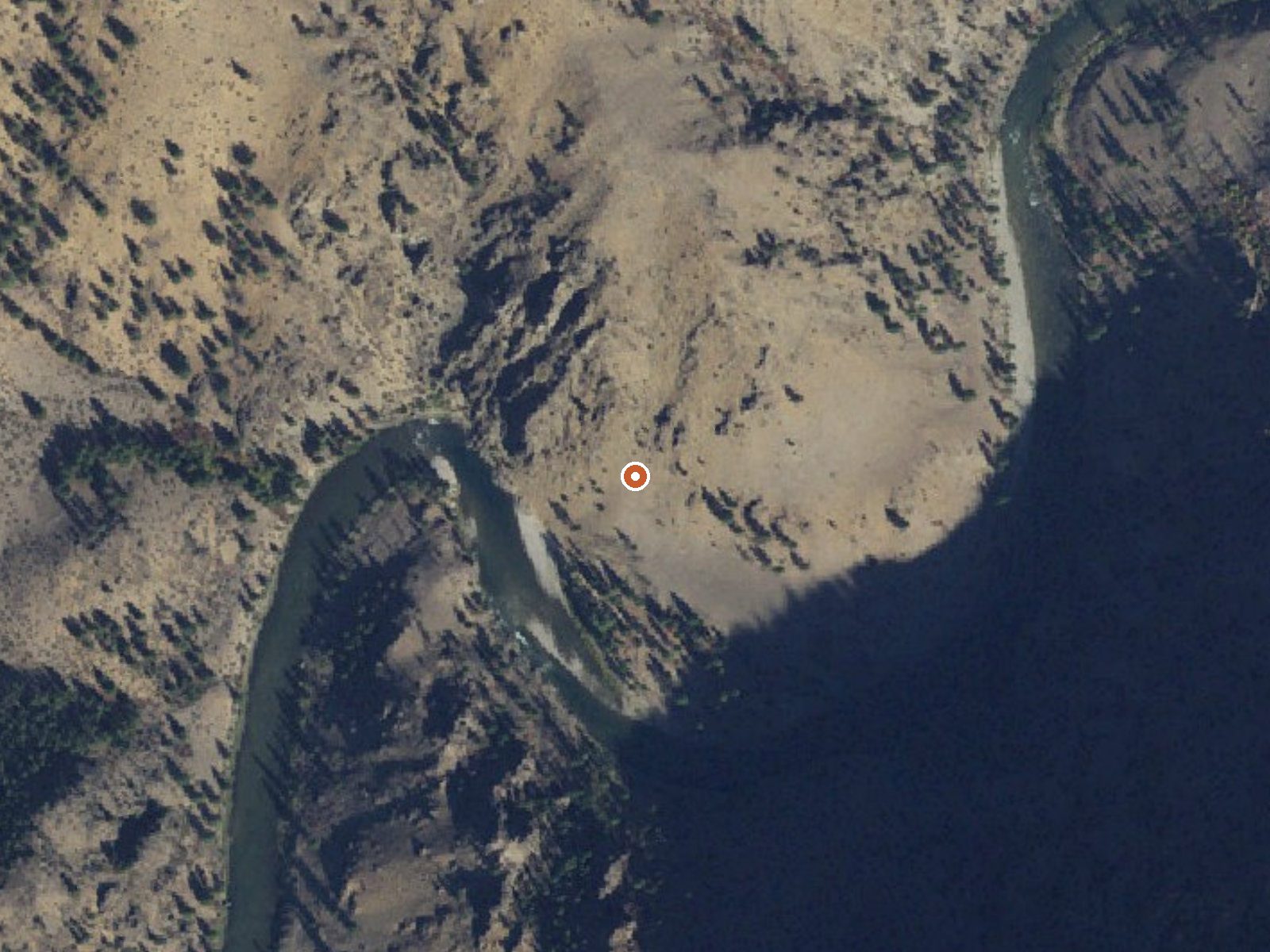
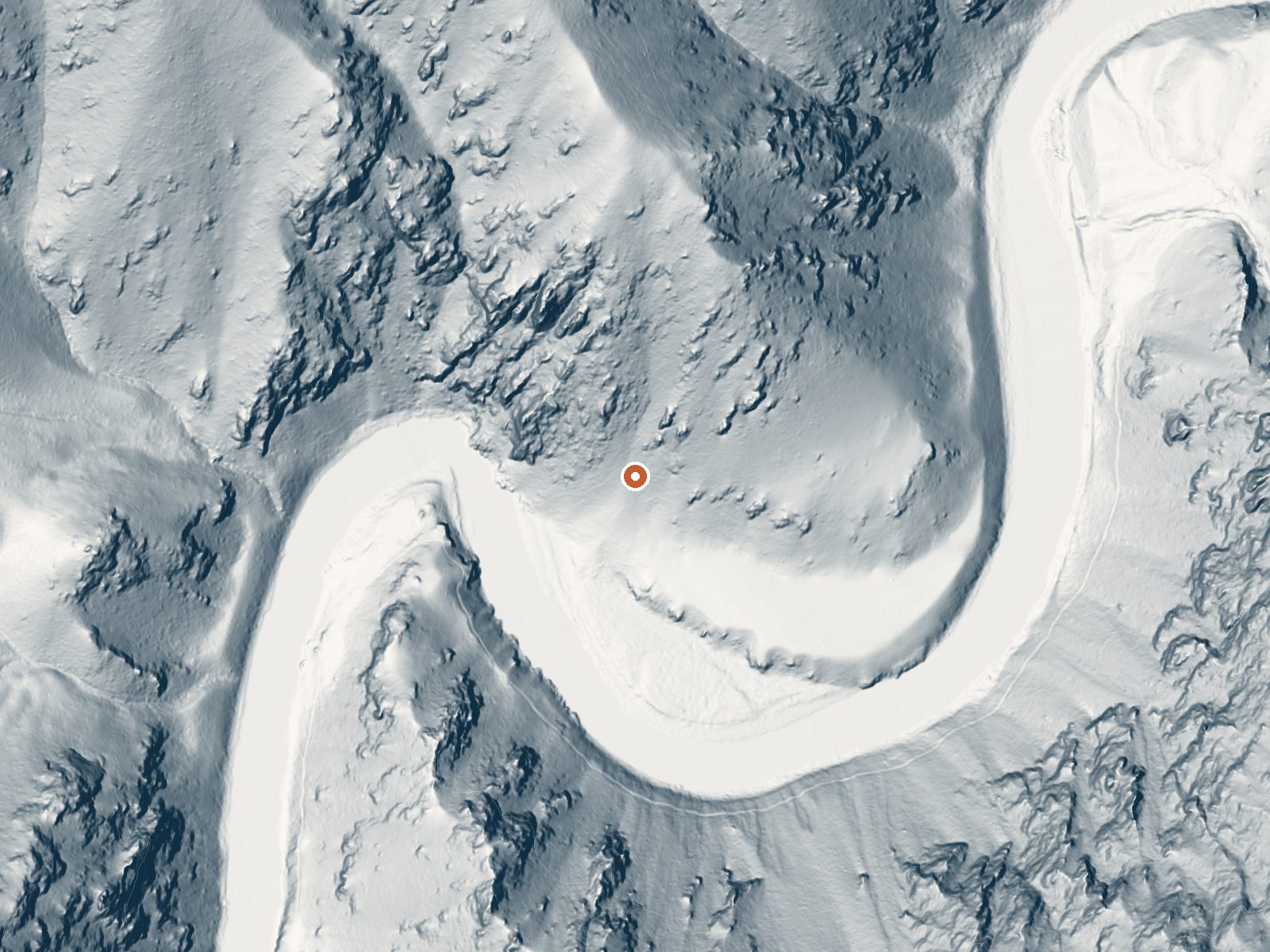
Drag the handle to compare the two views. The orange dot marks the spring, in a frame about three quarters of a mile wide.
Hospital Hot Spring is a backcountry source on Forest Service land in Custer County, Idaho, part of the Boise National Forest and a long way from anything. Challis is the nearest town listed, nearly thirty-six miles off. Public access is listed as open. The water runs hot, beyond what most people would sit in straight from the ground, and a 1980 sample found fairly low dissolved solids with some iron in it.
Reaching the source means a hike of about two miles from a road the record leaves unnamed. National Forest land with no wilderness or other special designation noted. The elevation is modest for central Idaho. Snow is another matter, over eight feet in a typical year. Summers are on the dry side.
Winter is the recorded best season, deep snow or no. Yellowjacket Guard Station is the one campground on file, close to nineteen miles away. Hot enough to burn with prolonged contact, so test it first. The chemistry sample dates from 1980, and with no road named, the hike in is yours to navigate.
Aircraft with laser scanners measured this ground to within inches. The scan strips out trees and buildings, leaving the bare shape of the land around Hospital Hot Spring.
- Setting
- Canyon floor
- Steep ground climbs away on both sides of the spring.
- Highest ground nearby
- 577 ft above the spring
- Within a quarter mile, to the north
A slice through the ground from southwest to northeast, about 0.6 miles end to end.
Elevation data: USGS 3D Elevation Program. Aerial imagery: USGS The National Map. Public domain.
That's about twice the US average of 65. It's higher than at 67% of the springs on this site.
Heat flow measures the warmth working its way up through the ground from deep inside the earth. Where it runs high, rain and snowmelt that seep down through cracks in the rock come back up hot.
See every spring on the geothermal heat map →
Heat flow estimate: Stanford Thermal Earth Model (Aljubran & Horne, 2024), CC BY 4.0.
The water at Hospital Hot Spring is alkaline (pH 8.9) with 278 mg/L total dissolved solids.
Overview Yellowjacket Guard Station is a historic Forest Service Ranger Station and Work Center. Originally constructed in 1925 and remodeled in 1934 by the Civilian Conservation Corps, the structure is eligible for listing on the National Register of Historic Places. Recreation Hikers, horseback riders, mountain bikers and off-road enthusiasts will find many trails in the surrounding area. Hunting is also a popular activity. Click here for an Idaho OHV safety messageFacilities The spacious...
Springs Near Hospital Hot Spring
More Springs Around 115°F
Alkaline Springs (pH ~8.9)
Hike 6 waterfalls near Hospital Hot Spring
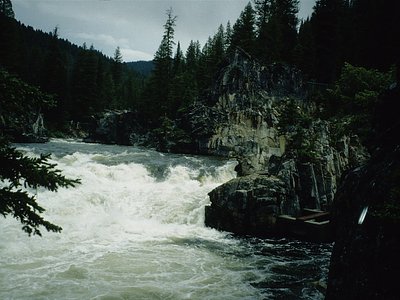
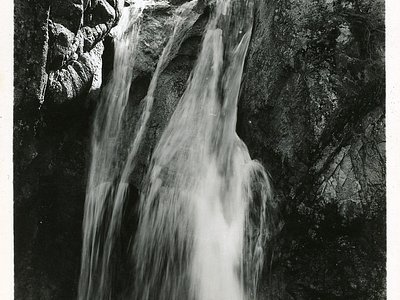
Looking for more outdoor adventures? Explore waterfall hikes near Hospital Hot Spring, Idaho.