Dutch Frank Hot Spring
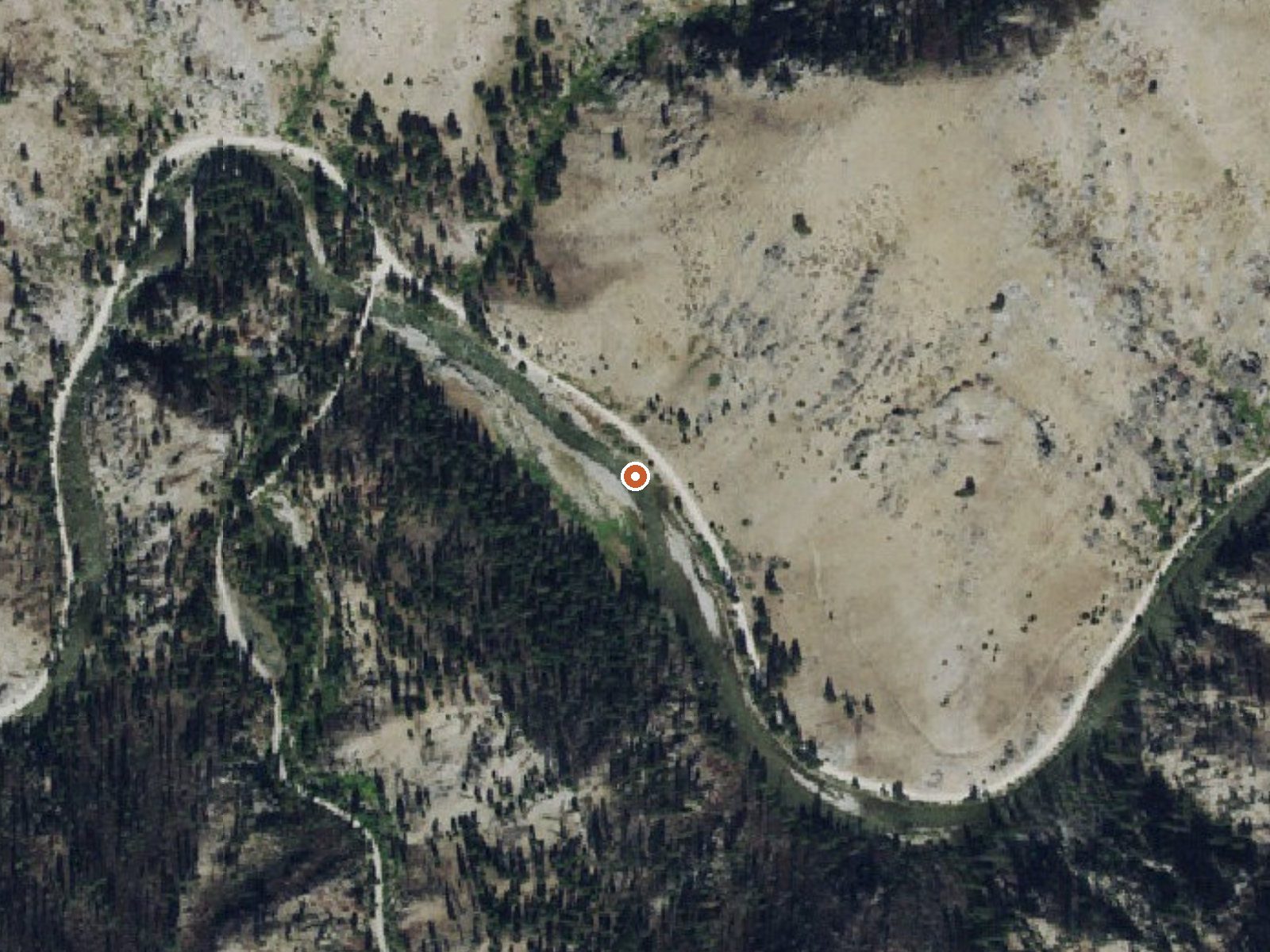
The orange dot marks the spring, in a frame about three quarters of a mile wide.
Dutch Frank Hot Spring comes up alongside Middle Fork Road in the Boise forest, twenty miles from Idaho City. At the source the water runs near a hundred and fifty degrees. That is scalding. the record says open and the Forest Service holds the land, so permission is settled and heat is what you deal with.
Under a hundred feet from the road. The elevation is about forty-one hundred feet. Ten feet of snow falls in a typical winter, and the rain is moderate. The nearest listed place to stay is Barber Flat Cabin, between five and six miles away. Nothing in the file covers the spring itself beyond the numbers.
Keep out of the source. At that heat water burns. The record puts the best months in winter. The pH figure, strongly alkaline, dates to a May 1981 sample. Park and you are there; access is open. Barber Flat Cabin for camping, if a cabin counts as camping for you.
USGS hasn't flown a detailed laser scan here yet, so this view comes from aerial photos and older elevation data.
- Setting
- Canyon floor
- Steep ground climbs away on both sides of the spring.
- Highest ground nearby
- 775 ft above the spring
- Within a quarter mile, to the northeast
A slice through the ground from southwest to northeast, about 0.6 miles end to end.
Elevation data: USGS 3D Elevation Program. Aerial imagery: USGS The National Map. Public domain.
That's about twice the US average of 65. It's higher than at 84% of the springs on this site.
Heat flow measures the warmth working its way up through the ground from deep inside the earth. Where it runs high, rain and snowmelt that seep down through cracks in the rock come back up hot.
See every spring on the geothermal heat map →
Heat flow estimate: Stanford Thermal Earth Model (Aljubran & Horne, 2024), CC BY 4.0.
The water at Dutch Frank Hot Spring is alkaline (pH 9.6).
Overview The Barber Flat Cabin site was established for administrative use by the Forest Service in 1923, and was used prior to that by the Barber Lumber Company. At the time, the Forest Service used a cabin already on-site as a guard station and then built a new one in 1927. The current cabin and outbuildings were built by the Civilian Conservation Corps in 1935, and the cabin today looks much as it did back then. Guests can drive to Barber Flat Cabin in two-wheel drive passenger cars or tr...
Springs Near Dutch Frank Hot Spring
More Springs Around 149°F
Alkaline Springs (pH ~9.6)
Hike 6 waterfalls near Dutch Frank Hot Spring
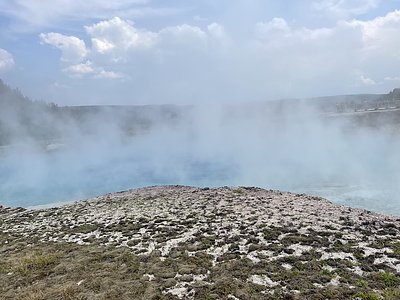
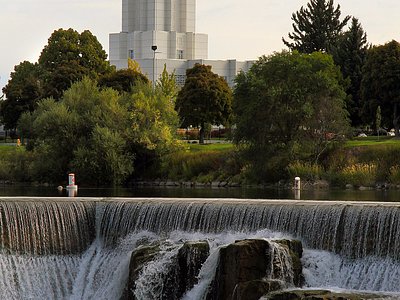
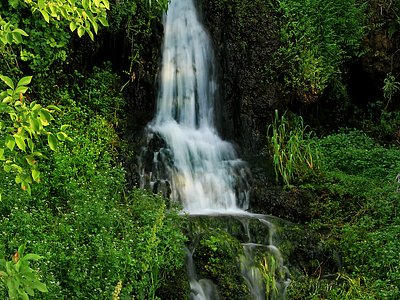
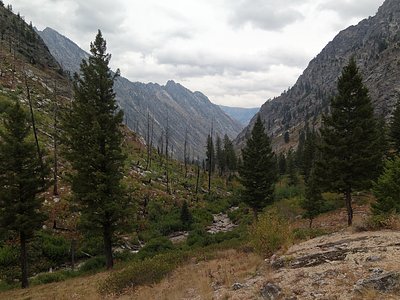
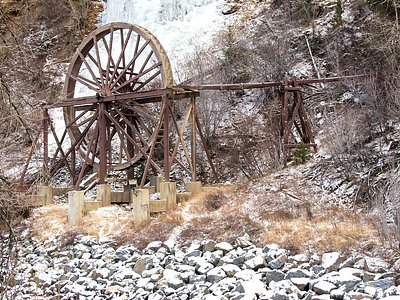
Looking for more outdoor adventures? Explore waterfall hikes near Dutch Frank Hot Spring, Idaho.