Seep
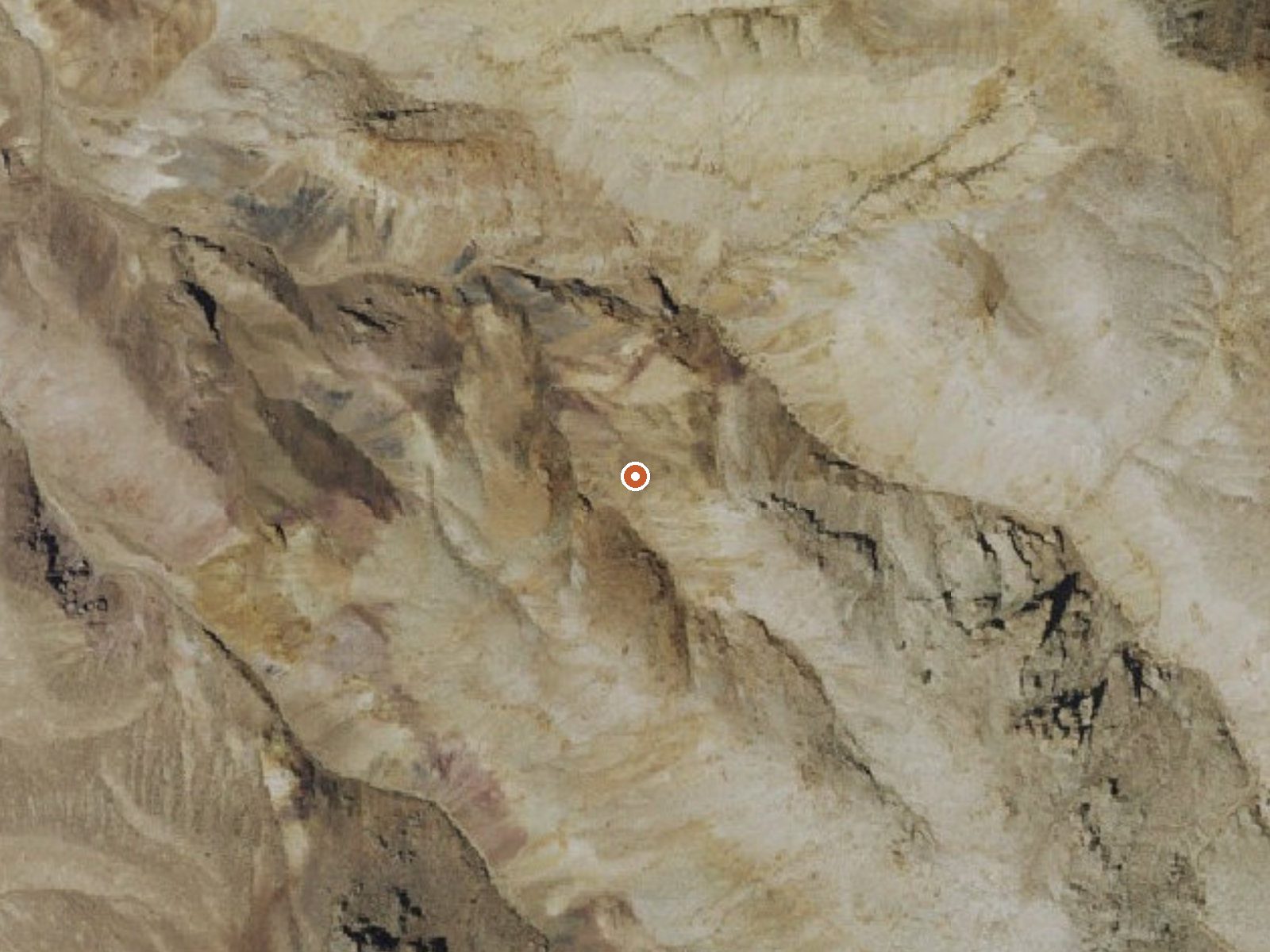
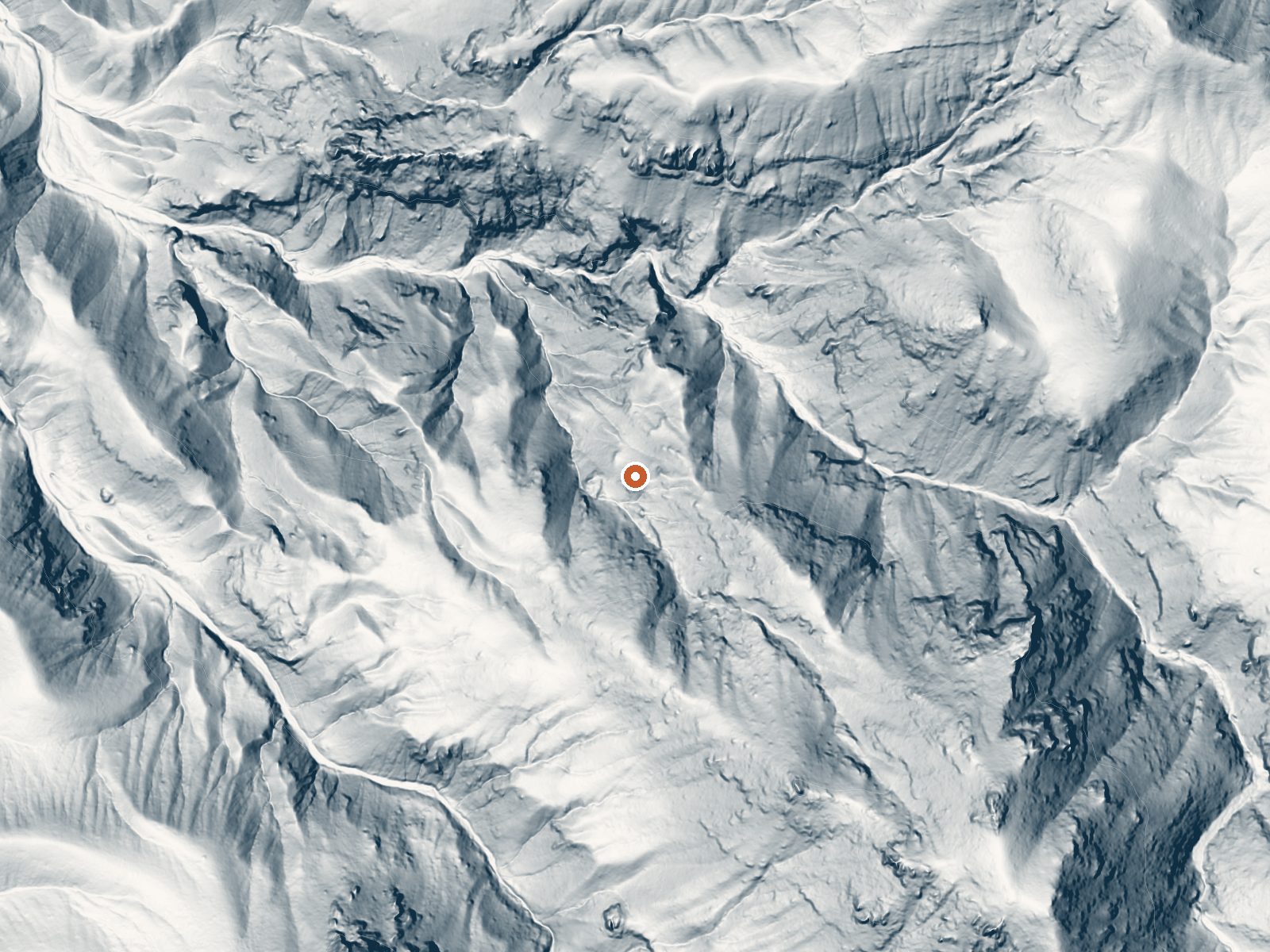
Drag the handle to compare the two views. The orange dot marks the spring, in a frame about three quarters of a mile wide.
Listed only as Seep on the record, this is a tepid thermal seep in Death Valley National Park on the Nevada side, Nye County, about 27 miles from Beatty. The water is barely warm. Access is open, and it is backcountry, five miles from the nearest road.
Scotty's Castle Road is the nearest road, a little over five miles away, and the record classes this as backcountry. The ground sits near 5,800 feet, dry, five inches of precipitation a year and ten inches of snow. It is National Park Service land.
Winter is on file as the season to come. Five miles each way with no trail described on record. No campground listed. No fee noted. At this temperature the seep is a curiosity; nobody is going to warm up in it.
Aircraft with laser scanners measured this ground to within inches. The scan strips out trees and buildings, leaving the bare shape of the land around Seep.
- Setting
- Hillside
- The spring sits on a steep slope that climbs to the southeast.
- Highest ground nearby
- 555 ft above the spring
- Within a quarter mile, to the southeast
A slice through the ground from northwest to southeast, about 0.6 miles end to end.
Elevation data: USGS 3D Elevation Program. Aerial imagery: USGS The National Map. Public domain.
That's about 1½ times the US average of 65. It's higher than at 35% of the springs on this site.
Heat flow measures the warmth working its way up through the ground from deep inside the earth. Where it runs high, rain and snowmelt that seep down through cracks in the rock come back up hot.
See every spring on the geothermal heat map →
Heat flow estimate: Stanford Thermal Earth Model (Aljubran & Horne, 2024), CC BY 4.0.
Seep sits at 5,767 feet above sea level, way above the mile-high mark. You may not feel the altitude strongly, but hot water still dehydrates you faster at elevation. UV is about 23% stronger than at sea level, so bring sunscreen and drink more water than you normally would.


As an Amazon Associate, we earn from qualifying purchases.