Smith Ranch Springs
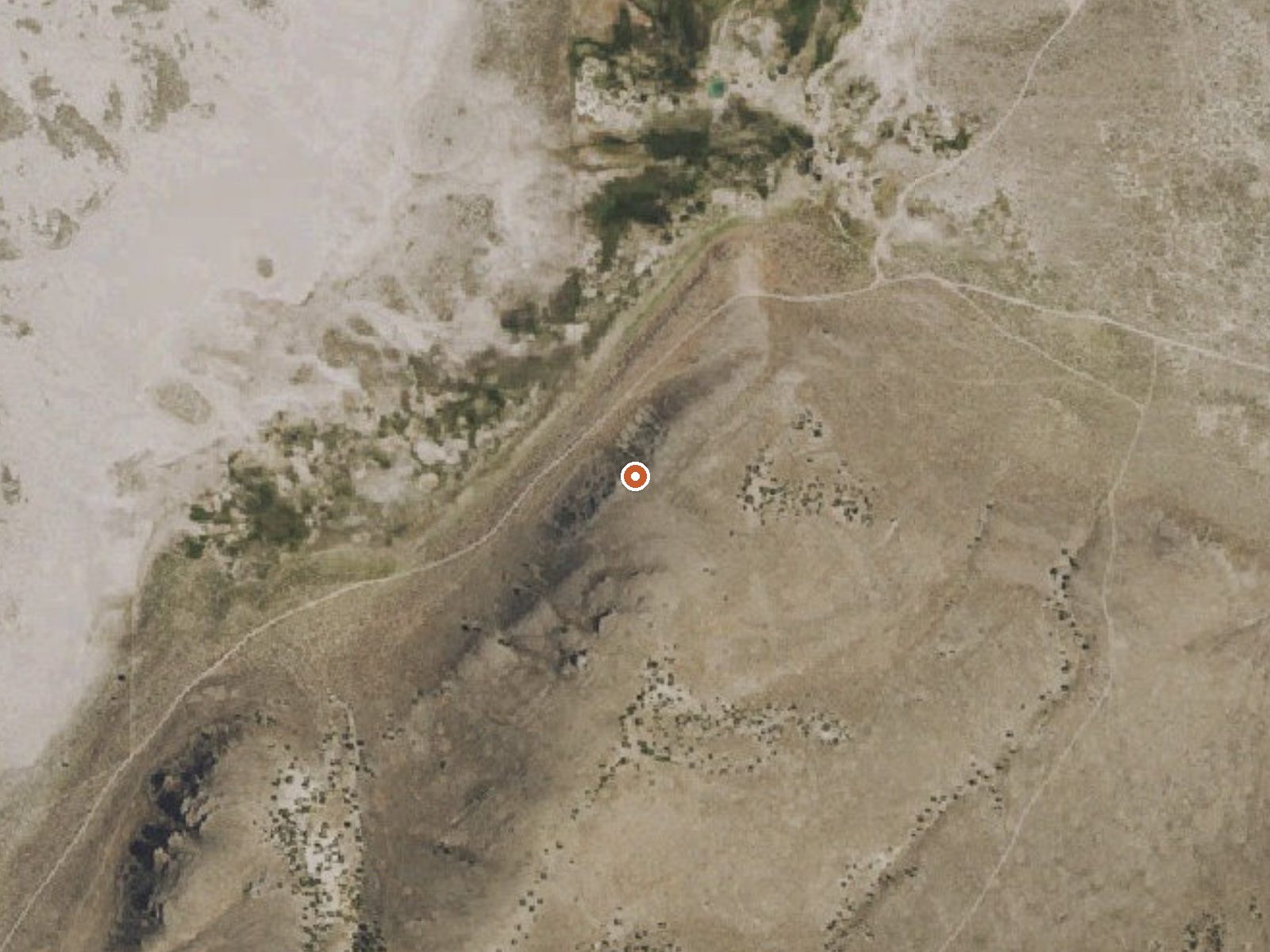
The orange dot marks the spring, in a frame about three quarters of a mile wide.
Smith Ranch Springs, on Wells Field Office ground in Elko County, run well past scalding, hot enough to burn skin on contact. Open BLM land about thirty-six miles from Spring Creek. Nothing in the record mentions a cooler pool, so count on looking and keep your hands out of it.
Roadside. The road runs a couple hundred feet off and nobody recorded its name. Nearly six thousand feet up, where a winter brings more than four feet of snow. Moisture across the year adds up to about thirteen inches.
South Ruby Campground is about seven miles away, which makes this an easy side trip from a camp there. Winter is listed as the best time, and at this elevation that likely means snow on the road in. The water will scald. Hold children and dogs well back. A 2000 sample put dissolved solids in the moderate range. No fee on file.
USGS hasn't flown a detailed laser scan here yet, so this view comes from aerial photos and older elevation data.
- Setting
- Hillside
- The spring sits on a steep slope that climbs to the south.
- Highest ground nearby
- 142 ft above the spring
- Within a quarter mile, to the south
A slice through the ground from north to south, about 0.6 miles end to end.
Elevation data: USGS 3D Elevation Program. Aerial imagery: USGS The National Map. Public domain.
That's about 1½ times the US average of 65. It's higher than at 33% of the springs on this site.
Heat flow measures the warmth working its way up through the ground from deep inside the earth. Where it runs high, rain and snowmelt that seep down through cracks in the rock come back up hot.
See every spring on the geothermal heat map →
Heat flow estimate: Stanford Thermal Earth Model (Aljubran & Horne, 2024), CC BY 4.0.
The water at Smith Ranch Springs contains 657 mg/L total dissolved solids.
Overview South Ruby Campground is situated above Ruby Lake at the base of the beautiful Ruby Mountains at 6,000 feet in elevation, near the Ruby Lake National Wildlife Refuge in Ruby Valley, Nevada. Ruby Valley is a surprising wildlife oasis. An expansive marsh is laced with riparian corridors coursing with cool, spring-fed waters. Together with lush meadow and shrub-steppe uplands, these habitats support a diversity of wildlife seldom found in the high desert and is one of the most important...
Smith Ranch Springs sits at 5,990 feet above sea level, way above the mile-high mark. You may not feel the altitude strongly, but hot water still dehydrates you faster at elevation. UV is about 24% stronger than at sea level, so bring sunscreen and drink more water than you normally would.


As an Amazon Associate, we earn from qualifying purchases.